Sex, Drugs, and College Football

North Carolina came in at number two on our College Football Crisis Rankings, and that may need to be elevated after a decent showing by number one ranked CU last night, oh, and this absolutely insane report about the Tar Heels that came out before the Buffaloes kicked off.

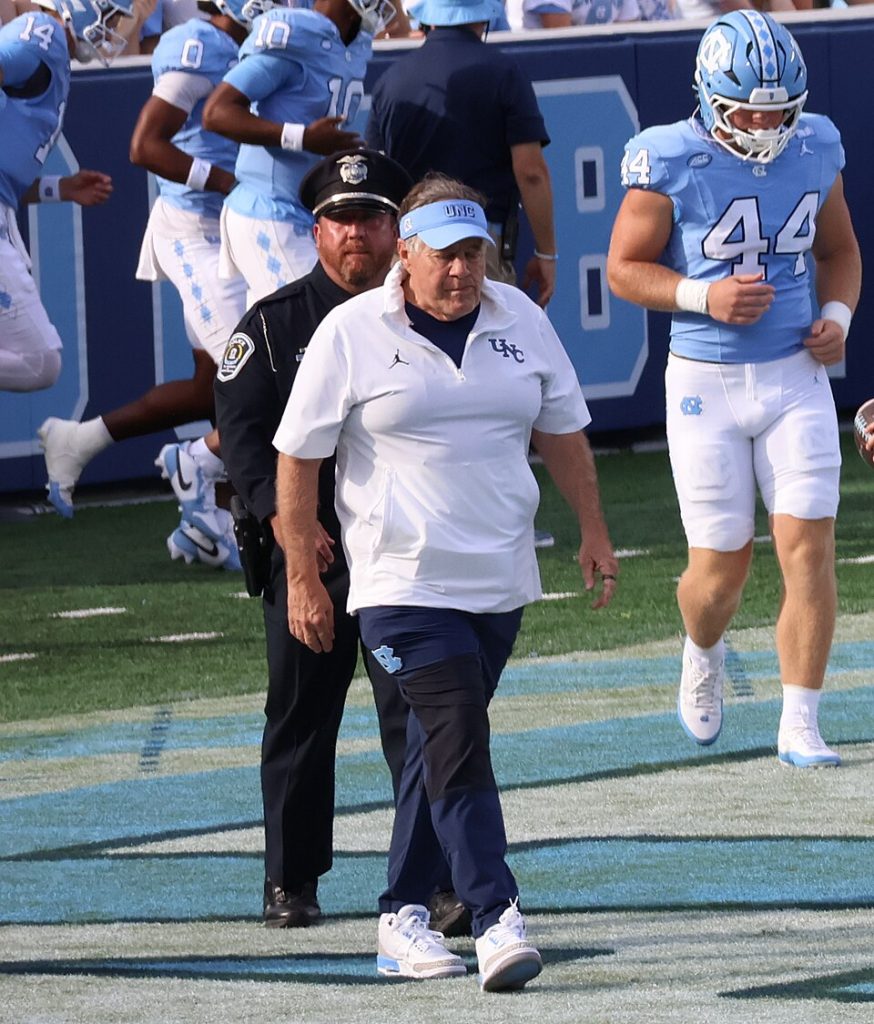
University of North Carolina football general manager Michael Lombardi, the highest-paid general manager in college football, resigned Thursday after a tumultuous tenure in Chapel Hill working alongside Bill Belichick, the university said. 

But the investigation is still ongoing, and lawyers hired by the university are now focused on behaviors by defensive coordinator Steve Belichick, people familiar with the investigation tell WRAL.

Colorado went into Atlanta and beat Georgia Tech 14-13, Julian Lewis hitting Charlie Williams for the go ahead touchdown in the final minute. Then blocked the Yellow Jackets’ attempt at a game winning field-goal to secure the victory. 

Amazingly, both teams began the season 1-0. Another reason that College Football is the absolute best. 

University of North Carolina – Chapel Hill is one of the most epic party schools in the country. And that’s just the Football staff.

Self-described Football Genius, Michael Lombardi abruptly resigned as UNC’s general manager Thursday, a month after being placed on paid administrative leave, and hours before WRAL published what the investigators have actually been asking about. Lawyers hired by the university have been questioning people about whether defensive coordinator Steve Belichick used drugs on the job, or handed them to at least one player. Steve has been on medical leave since early August.

And that’s only half of it. The same lawyers have been asking whether a female member of the recruiting staff had a sexual relationship with a player, and separately, whether assistant coaches were sleeping with the recruiting staff.

Can we add this to the list of benefits to come from women being shoehorned into coaching and staff positions in this sport?

“The head coach’s tenure has generated far more off-field headlines than on-field success.” — WRAL

Bill being Bill, he appears unfazed. And honestly, that’s part of what I love about the guy. The fact that the media, in particular the Boston sports media that has been trying to claim his scalp for years and continues to do so while he’s down in Chapel Hill, still can’t get him to change, apologize, or bow down to their demands. I loved the surly, poker-face press conferences he gave in New England. But I will not pretend he hasn’t done irreparable damage to his reputation since Brady left Foxborough. And many would argue, it wasn’t too hot back then either.  In this case, things appear to be getting uglier than they did in Foxborough, Aaron Hernandez aside. And still, they got pretty ugly.

People thought Bill having a 25 year old girlfriend was the craziest thing about the situation. Chapel Bill, one of the many nicknames that he trademark-rushed the second he took the UNC job, or as I am dubbing him, Boner Pill Bill, is the staff member who appears to have his personal life the most together. But clearly his efficacy as the leader of a Power 4 football program is abysmal. 

Having first-year Tar Heel Offensive Coordinator Bobby Petrino in the house for this really is the perfect garnish. Arkansas fired Petrino for cause in April 2012 after he laid his Harley down on Highway 16 with 25-year-old Jessica Dorrell on the back. He held a press conference two days later in a neck brace and said he was riding alone.

Dorrell was a former Arkansas volleyball player he had just hired onto the football staff at $55,735 a year, picked out of 159 applicants after an unusually short search, four days before the crash. He had also given her $20,000, which she used to buy a car. The state police report was about to go public, so he finally told his athletic director. He lost an $18 million buyout over it.

In true Bill Belichick fashion, amidst a storm of chaos, he pulled off a massive upset win over the TCU Horned Frogs last Saturday in Dublin, Ireland.

He’s not here to make sure people aren’t getting high and getting freaky, he only requires that you Do Your Job.

With this hellstorm, Belichick has accomplished in a year and a half what it takes other coaches decades to pull off. Another reason he’s the GOAT. 

Lane Kiffin, the King of Horny Coaches, burning bridges, and bringing ex-NFL players to college football, it’s your move pal. 

Photo: Hameltion (CC BY-SA 4.0)
Ball’s Clipped

The Los Angeles Clippers have been handed the basketball equivalent of the death penalty.

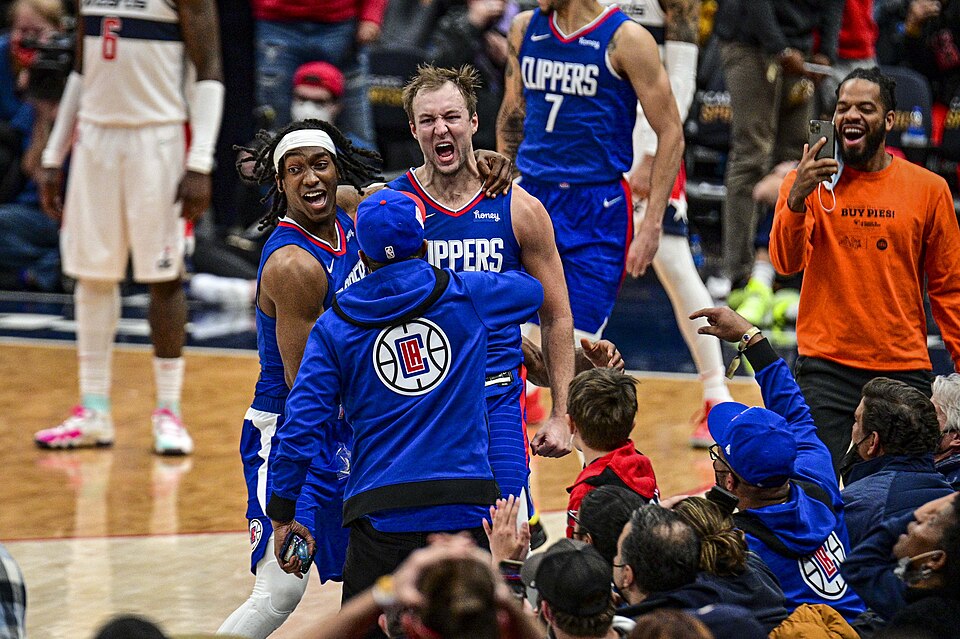
The NBA has stripped the Los Angeles Clippers of five first-round draft picks and fined owner Steve Ballmer $30 million at the conclusion of its probe into allegations that All-Star Kawhi Leonard received impermissible benefits during his tenure with the team in violation of the league’s salary cap.

The league is also fining Leonard $700,000.

The NBA announced the decision Wednesday. The Clippers will be stripped of first-round picks in the 2029, 2030, 2031, 2032, and 2033 NBA Drafts.

The league is also suspending Ballmer “from all league and team activities for one year.” — Yahoo Sports

And that’s just the top of it. Gillian Zucker, president of business operations, suspended a year without pay — directly culpable, and she lied to investigators. Lawrence Frank, president of basketball operations, six months. Five years of league compliance monitoring. Kawhi’s uncle and former business manager Dennis Robertson barred from doing business with NBA teams on behalf of any player for five years.

Here’s what they were accused of doing. Ballmer put $50 million of his own money into a “green bank” called Aspiration in September 2021. Later that month the Clippers announced a $300 million partnership with the same company. In April 2022 — nine months after Kawhi signed a four-year, $176.3 million max deal — Aspiration signed Kawhi to a four-year, $28 million endorsement contract through his LLC, KL2 Aspire. The contract let Kawhi decline to do anything the company asked. It also voided if he left the Clippers. Aspiration went bankrupt, its co-founder is doing 14 years in federal prison, and Kawhi never publicly endorsed a thing. Pablo Torre reported it, and won a Pulitzer for it. The league’s outside law firm spent a year confirming the details. Aspiration wasn’t alone either — investigators found the same pattern with Boingo Wireless, Daktronics, and Lockton, all of them doing business with the team. The Clippers also covered personal expenses for Kawhi and his family.

“I am deeply disappointed by the flagrant violations of our rules” — Adam Silver

The team shows no signs of surrender. “We vehemently reject the NBA’s findings” — the Clippers, who called the investigation biased and built backward from a predetermined conclusion, and said what the league told them privately doesn’t match what it announced publicly.

Now compare this to last October. The FBI arrested Blazers head coach Chauncey Billups and Heat guard Terry Rozier on the same morning, 34 people indicted across two cases, rigged poker games backed by the Mafia and insider prop betting on a player faking an injury. Actual crimes. Federal indictments. And what happened to Portland and Miami? Nothing. The league put two men on leave and let the franchises walk. Jontay Porter got a lifetime ban in 2024 and Toronto didn’t lose a second-round pick over it.

Gambling gets individuals in trouble, touching the salary cap gets your franchise gutted for a decade. The NBA actually does draw the line somewhere, at least there’s that.

Ballmer is the white knight who rode in to save the league from Donald Sterling. April of 2014, Sterling’s silly rabbit — her words, V. Stiviano on national television, to Barbara Walters — recorded him telling her not to bring Black people to Clippers games, Magic Johnson by name, and the tape went to TMZ. Adam Silver banned him for life, fined him the maximum $2.5 million, and moved to force a sale. Shelly Sterling had her husband declared incapacitated and sold the team to Ballmer for a then-record $2 billion. Twelve years later another scandal has rocked the team and the league.


Steve Ballmer made his fortune as a pitch-man for Windows. Not a software or engineering background, he did what the nerds can’t always do (Steve Jobs not included), he moved fucking product.

Ballmer paid $2b for a new super state of the art arena in Inglewood, and he is barred from watching his team in it for the next twelve months.

He should have placed a bid on the Angels to keep him busy in the meantime, he has the scratch lying around.

I like Steve Ballmer, he’s an absolute psychopath in a way that makes for great content and sports radio fodder. And he is obsessed with winning, something sports fans claim to want from their owners more than anything else, well that and paying for their own stadiums, which Ballmer also did.

Five first round picks being stripped away, plus California’s 13.3% tax rate, and the big brother Lakers still being the A side in town, the Clippers need a miracle to compete for a title again in the next decade.

But I guess when you put it that way, the sanctions may end up having little effect on them.

Photo: All-Pro Reels — CC BY-SA 2.0

X Money X Problems


This week X, formerly Twitter, began the rollout of X Money. This has been something I have been anticipating since Elon Musk purchased Twitter for $44 billion in 2022.

X Money is designed to make traditional bank accounts unnecessary for users.” — The Paypers

X Money is not simply a feature of X, but may be the reason Elon acquired the social media platform to begin with. Elon had originally envisioned X.com as a payments system all the way back in 1999. The concept behind it would go on to become PayPal. Elon has long understood the potential for innovation and opportunity when payments and finance finally merge with technology in a truly meaningful way. Far beyond the reaches of what CashApp and PayPal offer today.

X is positioning itself to become the WeChat of the rest of the world.

WeChat is China’s everything app, and has been for over a decade. Tencent launched it as a messaging service in 2011. Today it runs about 1.43 billion monthly users. It’s messaging, it’s a social feed, it’s video, and it’s WeChat Pay — roughly 935 million people paying for things by scanning a QR code, from a department store checkout down to a guy selling fruit off a cart. But the part Americans consistently miss is Mini Programs. These are app-like services that run inside WeChat itself, 4.3 million of them, used by around 945 million people a month. You book the doctor, hail the cab, pay the power bill, order dinner, buy the movie ticket, and file your government paperwork without ever leaving the app or downloading a single thing. You don’t have twelve apps, twelve logins, and twelve saved credit cards. You have one.

Yes, the Chinese version is restrictive, surveillance heavy, and censored. That’s not the part I’m pointing at. The singular model is the point. Whether we end up with their version of it here is a separate question.

Nobody in the West has built it — not because it can’t be built, but because the pieces were always owned by different companies with no reason to cooperate. Apple owns the wallet. Meta owns the social graph. Your bank owns the settlement layer. Elon is the first person sitting on all three at once.

X Money is offering Premium users 4% on their Stored Value Accounts and to its Premium+ users, 6%. Yes, 6% on cash you have parked in the X account, and they’re issuing digital debit cards and physical metal Visa cards. The card drops into Apple Pay and Google Pay, and a virtual version is issued the moment you sign up, so you’re spending before the metal one hits your mailbox. Not in New York, though — no money transmitter license there, which means no APY at all for New York residents. Massachusetts is out entirely. It’s live in 41 states plus D.C.

They have also partnered with Cross River Bank as their sponsor bank. X isn’t a bank and doesn’t hold a charter, so Cross River provides the charter, the FDIC-insured deposits, the compliance backbone and the payment rails. This is the banking-as-a-service model, and Cross River is effectively the bank behind fintech — a state-chartered New Jersey outfit in Fort Lee running more than 120 clients including Stripe, Affirm, Coinbase, Best Egg and Upstart on an $8 billion balance sheet. If you’ve ever financed a purchase through Affirm or moved money through Coinbase, Cross River probably executed it and you never knew their name. Deposits are insured to $250,000, with up to $10 million available through a cash sweep across partner institutions.

And the Stored Value Account doesn’t have to stop at cash. Right now X is paying 4% to Premium and 6% to Premium+ on dollars parked in the app. Let users hold stablecoins in that same account and the yield options widen considerably — tokenized Treasuries, on-chain lending, staking proof-of-stake assets like Ethereum or Solana. Your checking account, your savings account, and your brokerage stop being three separate things you log into.

There has been talk about “paying in crypto” with X Money, but I think that is the wrong angle to look at this. The GENIUS Act that passed in July 2025 by the US and signed by President Trump allows for a company like X to issue its own stablecoin, a cryptocurrency pegged one-to-one to a dollar and backed by reserves the issuer is legally obligated to redeem at face value, but they don’t even need to do that. They can allow X users to hold existing stablecoins (RLUSD, USDC) in their X value accounts, then transact them with merchants, peers, make payments, settling them with a blockchain like Solana, Ripple or Stellar as the middle layer. This will happen instantly and appear just as normal to someone as your standard PayPal transaction, but real-time settlement, with negligible fees on a ledger that confirms it for both sides. The change isn’t sending .0001 Bitcoin or Ethereum to pay for your burrito bowl, it’s that you don’t even see that layer underneath.

Innovation’s most bearish babe, Sen. Elizabeth Warren, wrote Musk in April flagging what she called a “suspicious carveout” that lets a private commercial company like X issue its own stablecoin, and noted that Thune had blocked a bipartisan floor amendment to close it. She’s right about the mechanism. She’s just wrong about which part should worry anyone.

When you swipe a card today, the transaction looks instant. It isn’t. What happened was an authorization — a promise. The real money moves later, batched overnight, run through the card network, settled between the merchant’s bank and yours over the next day or three. Venmo and Cash App are the same trick. Your balance updates the second you hit send because the app is just moving a number from one row of its own ledger to another row of its own ledger. The actual dollars are still sitting at a bank, waiting on ACH.

Distributed ledger technology collapses all of it. The transfer is the settlement. There is no authorization, then clearing, then settlement — there’s one event on a ledger both sides can verify, running 24 hours. That’s the important change. Not the currency, the plumbing. If it seems inconsequential, it frees up trillions of dollars in capital currently kept in limbo when done at scale.

X Money can put that in the palm of your hand. (Yes, perhaps like the Mark of the Beast.)

The move could potentially merge banking, investing, social media and AI into a singular app.

When I say payments, I actually mean someone’s entire financial life.” — Elon Musk

The concept of the “everything app” is the next evolution in the “everything phone,” the smart phone. A smart-app that allows users to go back and forth between all of these aspects seamlessly, when done well, reduces friction to such a degree that adoption becomes inevitable.

The future is already being born. The good thing about it is that it only comes one day at a time.

Photo: Daniel Oberhaus, CC BY-SA 4.0

Angel Investor in the Outfield

The Los Angeles Angels fanbase has been set free.

“Arte Moreno has agreed to sell the team to billionaire Stan Kroenke.” — MLB Trade Rumors

Terms weren’t disclosed, but the LA Times reports the price clears the record $3.9 billion the Padres just sold for.

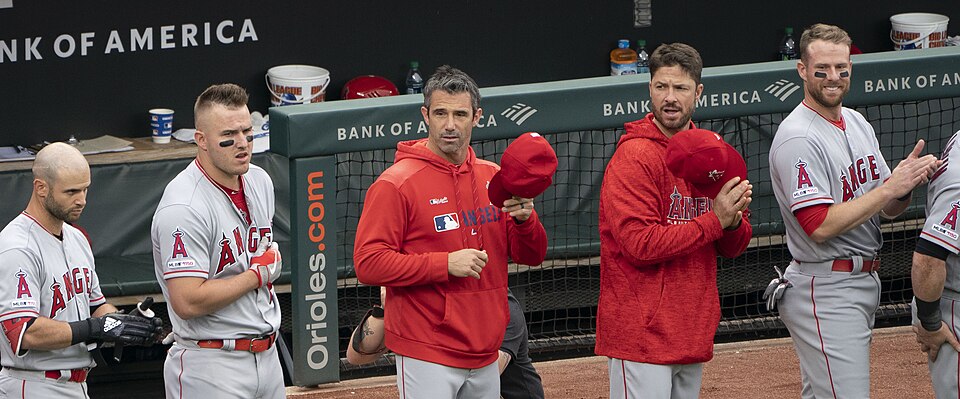
Arte’s disastrous run as owner of the Angels finally comes to an end. After years of “Sell the team!” chants, and fumbling having both Mike Trout and Shohei Ohtani on the same team, in their prime, in the nation’s second largest media market with nary a postseason appearance. Not even a freaking Wild Card. They just concluded their 11th consecutive losing campaign. They haven’t played an October game since 2014 — eleven straight postseasons missed, the longest active drought in baseball. The Butcher of Anaheim has finally relinquished the reins.

Kroenke continues to build his sports empire. Kroenke Sports & Entertainment owns the Rams, the Denver Nuggets, the Colorado Avalanche, the Colorado Rapids, the Colorado Mammoth, and Arsenal — and now a controlling interest in the Angels, pending MLB approval, with the deal expected to close in the first quarter of 2027.

Kroenke has proven to be a very successful owner. Arsenal won the Premier League this past May, their first title in 22 years, and came a penalty shootout away from a Champions League double. The Nuggets won the NBA title in 2023. The Avalanche took the Stanley Cup in 2022, the Mammoth won the NLL Champion’s Cup that same year, and the Rams won Super Bowl LVI in February 2022. Five different leagues, five trophies, five years.

Also interesting that with the Dodgers potentially being up for sale in some capacity later this year, he opted for the Angels instead. Perhaps preferring outright ownership to being part of a group.

This brings up the question, is Stan Kroenke, with a net worth of $24.3 billion, in favor of a salary cap as an MLB owner?

Hey John Henry, your turn to cash in! #SellTheSox

Photo: Keith Allison (CC BY-SA 2.0)

Slop Shot

The NHL appears ready to expand into either Houston or Austin, with Houston having the current edge, and then beyond.

The league currently has 32 teams, and in many ways I feel this is the perfect number, they could mirror the NFL model. Eight divisions of four teams apiece, two sixteen-team conferences. It all fits together so nice and neat, and makes postseason seeding much easier to formulate.

I have even mocked this up for the NHL, done with respect to history and regional rivalries:

Eastern Conference

Atlantic — Boston, Montreal, Toronto, Buffalo

Metro — NY Rangers, NY Islanders, New Jersey, Philadelphia

East — Pittsburgh, Washington, Columbus, Ottawa

South — Carolina, Tampa Bay, Florida, Nashville

Western Conference

Central — Chicago, St. Louis, Detroit, Dallas

North — Winnipeg, Minnesota, Colorado, Utah

Pacific — Vancouver, Calgary, Edmonton, Seattle

West — San Jose, LA, Anaheim, Vegas

Instead, the NHL is currently at four divisions of eight teams that aren’t even geographically aligned, and their playoff seeding format is incredibly confusing. Their point allocation for wins and overtime is designed to keep teams closer together, which last season led to Vegas winning the Pacific Division at 39-26-17 while Anaheim, who won four more actual hockey games at 43-33-6, finished third in the same division. Vegas banked seventeen overtime losses, worth a point each against the two a team nabs for a W. San Jose won exactly as many games as the division champions and missed the playoffs by nine points. Vegas went on to lose the Stanley Cup Final.

The NHL has no interest in fixing this issue, or the currently constructed divisional format, instead they’re hungry for expansion. The league’s seven Canadian based franchises mean there are only twenty-five American markets with NHL teams. Leaving opportunities in places like Houston, Austin, Atlanta, and Phoenix.

Atlanta has already failed twice as an NHL city, but the times have changed considerably since their last outing. Corporate sponsorships, which the ATL can provide the team en masse, and the boom in live sporting events, makes it a relatively safe bet for success if given a third chance.

Phoenix just lost their team to Salt Lake City over an arena. The Coyotes were pushed out of Glendale in 2022 and spent their last two seasons playing in Arizona State’s 4,600-seat Mullett Arena while chasing a permanent home. When Tempe voters rejected a $2.1 billion arena and entertainment district referendum in May 2023, the clock started. The franchise was sold and moved to Utah eleven months later.

What may come as a surprise to some, Phoenix is actually a city with a prominent hockey culture. Suburban families out there have money, and when it’s 115 degrees for four months a year, an ice rink is the best place in town to take your kid.

Sabres center and franchise cornerstone Tage Thompson was born in Phoenix while his father was in the Coyotes organization. Maple Leafs captain Auston Matthews, the 2016 first overall pick, moved to Scottsdale as an infant and got into the game watching the Coyotes play. The Tkachuk brothers, Matthew and Brady, now both on the Florida Panthers, were both born in the Valley during Keith’s run as Coyotes captain. Sabres winger Josh Doan, son of Coyotes franchise scoring leader Shane Doan, was born in Scottsdale and came up through the Phoenix Jr. Coyotes program. Phoenix hockey culture is a significant factor in what brought home the gold for the USA at this year’s Winter Olympics, the country’s first since 1980.

It makes sense the NHL would want to expand into more markets in the United States, but crossing the thirty-two team threshold will water down the talent pool, and potentially weaken the excitement of the game.

What would, say, a thirty-seven team league in major American sports look like? Is there enough elite talent to fill out that many rosters and maintain the level of quality game-to-game? Is the thirty-two team concept just the current psychological barrier based on where the NHL and NFL currently sit? 

Teams being added in low-tax states would spur more competition at the top, but may make the gap between them and the rest of the field even wider.

The league sees dollar signs with new franchises going for two billion dollars — three times what Seattle paid and four times Vegas — with the arena build pushing the total investment to $3.5 billion for the Friedkin family, who will own the new Texas franchise should it be greenlit. Greater inventory of games to sell to broadcasters, more arenas to fill, more markets to sell merchandise, and so forth. The current 32 teams pull about $625 million a year from Disney and Warner Bros. Discovery, and the next media rights negotiation starts after the 2027-28 season. The lowest grossing of the big four American sports leagues being the first to test the ceiling for teams sounds risky. 

I’d prefer to see Austin get the nod. Houston may be the larger TV market, but ATX would be the better cultural fit and be home to more people who actually care. Austin FC showed there’s a sporting culture outside the Longhorns, and the corporate suites would sell out immediately. The Spurs already play home dates at the Moody Center — Austin is San Antonio’s B town for basketball. Put the NHL in Austin and San Antonio becomes the same for the Capital. 

On the upside, it would likely make it even harder for Canada to bring home the Stanley Cup. Thirty-three teams with Houston? One team for every season since a Canadian club last raised the Cup. 

Photo: Mack Male (CC BY-SA 2.0)

Capital Punishment

One of the more surreal articles I read in the last decade explained how some nations would move toward negative interest rates for personal bank accounts. Meaning the money you have in checking and savings, you could lose an ever increasing % of it annually for not spending or investing it, according to the whims of the ruling class. And if you did invest it, you would be taxed on its unrealized capital gains.

It sounded absurd, but if you want to see the truly unimaginable enacted into law, you usually have to look no further than the European Union.

This isn’t a new idea either. The European Central Bank, the institution that sets monetary policy for the eurozone, ran a negative deposit rate from June 2014 until the middle of 2022. The banks passed the bill down. By July 2021, 372 German banks were charging negative interest, and what started as a fee on large corporate balances had spread to private accounts of any size. Denmark’s Jyske Bank did it to its retail customers too. Europeans have already had money pulled out of their accounts for the crime of leaving it there.

Fresh off its grotesque new rollout, the “Migration Pact“, which forces quotas of foreigners into European nations, or charges €20,000 per migrant for turning them down, the protectors of liberal democracy continue to spread peace and prosperity with an iron fist: 

As the EU is now interested in personal savings accounts, no doubt dismayed by the fact that the individual wealth of their nations is seeking to extricate their capital to places that are less ideologically punitive in their approach to personal finances.

Notice what the solution never is. It’s never lower taxes, fewer regulations, or an economy someone would actually want to park capital in. The money isn’t leaving because Europeans are financially illiterate. It’s leaving because they can do math. So rather than create nourishing conditions, they’d rather cage it in. 

Something that will be possible when the EU moves to a Central Bank Digital Currency is baking into the currency negative interest rates, and even expiration dates on the funds, forcing people to spend their money before it becomes irredeemable. Using it to force stimulus and investment, and increasing their ever tightening control over the native populations they continue to subjugate.

My view on Cryptocurrency, Blockchain Technology, and Decentralized Finance, is that it has both the power to financially liberate, or ensnare a people, depending on who is, and how it is, finally implemented.

It’s critical when the transition takes hold that competition, individual rights, personal choice and national sovereignty are the driving forces behind it, not technocratic enslavement.

The Last Commodity

You’re spending your most important resource right now and you may not even realize it. Your attention. And I thank you kindly for spending a little of it here.

Attention is the last commodity. It’s what is truly being struggled over in the streaming wars, sports, gaming industry, and both directly and peripherally, the AI boom.

Streaming was supposed to streamline, no pun intended, where your attention was going. Pay the fee, skip the ads. That lasted about a decade. Netflix, Prime, Peacock, Disney, Paramount — all of them run ads now. More than 60% of new Netflix signups take the ad tier. Streamers often lose money on their ad-free tiers versus what they would be paid to take less money and show their subscribers ads. When people began to cut the cable cord, corporations were desperate to get their brands and products in front of the eyes of consumers, wherever they so happen to be.

With YouTube Premium I skip the ads that play through Google AdSense at the beginning of the videos, but I have to manually fast-forward to avoid the product placement and paid sponsorships. Then there’s promo codes. Affiliate links. The ad used to interrupt the content. Now the ad is the content and you often can’t find the seam.

And we’re still just talking about advertising. That’s just one small aspect of this, the larger picture is simply, what gets our attention. And that applies to everything.

Underneath it all sits the algorithm, which isn’t trying to show you what’s good. It’s trying to keep you there. Short-form video is the purest version — an infinite column of stimulus tuned by a machine that knows your weak spots better than you even do.

“SVA was associated with attentional deficits, impaired executive control, and working memory problems.” — International Journal of Adolescence and Youth

SVA is Short Video Addiction. Executive control is the part of you that decides. That’s what’s eroding, and it’s already reached a dangerous point.

YouTube has recently changed their creator pay-out system, and it’s rewarding long form again after the short form gold rush. The thresholds went up on both sides, but long-form still takes the bigger cut of the split. The goal is simple. Keep people on the platform longer, and have more content people are willing to sit through ads to see. A short captures, but doesn’t hold you. A fifteen minute video does.

If you think I’m overselling it, there’s already a cryptocurrency for this. Basic Attention Token, built by the guy who created JavaScript. It measures how much attention you spend and pays you a cut. Raised $35 million in under a minute.

“BAT connects advertisers, publishers, and users and is denominated by relevant user attention.” — Basic Attention Token

Denominated. There’s a whitepaper. There’s a ledger. The commodity of attention has been priced and put on a market. Which shows something unprecedented is taking place that we’re still on the ground floor of.

What does the world look like when generations of people are living life with augmented and virtual reality headsets/eyewear on, gaming, gambling and gooning? The last one is a Gen Z term for one who obsesses over pornography.

Yes, I imagine people will be dating, mating and living their lives in a parallel digital world. And in some fashion getting paid for it.

Facebook/Meta tried to make it a thing, spending more than $80 billion on it and wound up failing miserably. It was so poorly constructed it feels like a money laundering scheme. I haven’t seen that much money result in so little production since California’s high-speed rail.

If the picture I painted sounds bleak, a dystopian future that blends WALL-E, Ready Player One and Idiocracy, know that we’ll have a choice in the matter.

A counterculture movement taking place today seeks to take back our time, attention, and energy from all that entangles us. Rawdogging Flights has become a meme, young men who will board flights across the country and instead of burying their heads in a tablet for six hours, they merely look at the flight tracker on the seatback screen in front of them and people watch, and think, and daydream.

One of the fastest-growing accounts on X is a book club that seeks to use classic literature as a way to combat modernism and all its attention-deficit inducing pitfalls. They’re currently reading The Brothers Karamazov. There’s another trend happening where people dive into The Count of Monte Cristo.

I also don’t believe this is merely an economics story. The battle taking place goes deeper than just being for our mind. The Church Fathers had a word for it long before these technologies existed — nepsis, watchfulness. Guarding your mind against the thoughts that wander in uninvited. They understood your attention is the doorway to your soul.

The modern world is designed to separate this from you all day, everyday, without you even realizing it.

Anyways — thank you for your time. You’ve earned .00001 BAT.

Any Way You Slice It

Earlier this week I asked, Where’s the Beef?, and mentioned how Trump’s plan to import 300,000 metric tons of beef from overseas at 25% below market value can offer a little relief to the symptoms, but doesn’t address the disease. Including how the big four meatpackers have a pseudo-monopoly on the game.

POTUS has responded to that this week. Not directly to me, but — Mr. President, if you have been checking the site, please read till the end.

It’s an important step, one that actually provides some relief to our ranchers. But not one that will be felt immediately (or on your next trip to the grocery store).

Next up, please wipe out the national debt using crypto, return the nation to a gold-backed currency, and deport the 50 million foreign-born people living in the country today. (According to former Border Patrol commander Greg Bovino, the real number of illegals alone is more than double that.) Then seize all the farmland owned by China and every other foreign nation, along with whatever the transhumanists like Bill Gates and the climate agenda outfits are sitting on.

That should get rising food costs back under control.

What’s for dinner?

The Pro-Am Triple Crown

The Pro-Am Triple Crown is a stat I have been unofficially tracking in my football observing life for decades. It’s an incredibly rare achievement. The feat requires winning the Heisman Trophy, the National Championship, and then being selected first overall in the spring draft that follows.

To date there have been only five players to achieve this. Three of them within the last 15 years.

Cam Newton went 14-0 at Auburn in 2010, took the Heisman, beat Oregon for the BCS title, and went first overall to Carolina that April. Joe Burrow’s 2019 at LSU is the best season a quarterback has ever put on tape — 5,671 yards, 60 touchdown passes, 15-0, and a Heisman margin so wide it broke O.J. Simpson’s 1968 record. Cincinnati took him first the next spring. The passing game coordinator who built the juggernaut offense around him was Joe Brady, current head coach of the Buffalo Bills. Burrow was also the first LSU player to win the Heisman in sixty years. The third player to complete the trifecta this century is Fernando Mendoza, and we’ll get to him.

Which brings me to the other two, both from my beloved Fighting Irish.

Angelo Bertelli won the Heisman for Notre Dame in 1943 in six games. The Marines called him up after the Navy game in late October and his college career was over. The Irish won the national title anyway and the Boston Yanks took him first overall in 1944. He never played a down in the NFL. He deployed to Iwo Jima instead.

Six years later Leon Hart did it again for Frank Leahy. Undefeated 1949, consensus national champion, Heisman and Maxwell winner, first overall to Detroit in 1950. He’s still the last lineman to win the Heisman. Notre Dame has two of the five and both of the historical ones. Nobody else has more than one.

There have been a few players in recent years that hit all three objectives but did so over the course of multiple seasons. Jameis Winston won the Heisman and the title in the same year at Florida State in 2013 as a redshirt freshman, then played another season before entering the draft in 2015 to go first overall. O.J. Simpson has all three pieces — the 1967 title at USC in his first year on campus, the 1968 Heisman, first overall to Buffalo in 1969. Billy Cannon won LSU’s title in 1958 as a junior, took the 1959 Heisman, and went first overall to the Rams in 1960. And Ernie Davis was a sophomore on Syracuse’s 1959 championship team, led them in rushing and won Cotton Bowl MVP, then took the Heisman in 1961 as the first black player to win it and went first overall in 1962. Like Bertelli, he never played a professional down. Leukemia took him at just twenty-three years old. 

Bryce Young has the three honors over multiple years, but my criteria requires being a starter at their position in the national championship season. He threw for 156 yards the entire 2020 season behind Mac Jones. Vinny Testaverde is out by the same rule — he redshirted in 1983 while Bernie Kosar won Miami a championship.

Bo Jackson is the one worth arguing about. Auburn went 11-1 in 1983 and beat Michigan in the Sugar Bowl playing the hardest schedule in the country. Miami vaulted from fifth to first after the Orange Bowl and took the AP, UPI, FWAA and coaches titles. Auburn got named champion by the New York Times computer poll, Billingsley, the CFRA and a few others, and Auburn now officially claims it. Pat Dye said his team would wear New York Times rings. So Bo has a Heisman, a first overall pick, and a national title that exists entirely at the discretion of whichever selector you feel like trusting. He also never signed with Tampa Bay. 

And there’s a much longer list of players who have hit two-out-of-three. Baker Mayfield won the Heisman at Oklahoma in 2017 and went first overall to Cleveland in 2018, but Georgia bounced the Sooners in the Rose Bowl semifinal. Caleb Williams took it at USC in 2022 and went first overall to Chicago in 2024 — no title, and two years between the trophy and the pick. Carson Palmer won the 2002 Heisman and went first to Cincinnati in 2003 while Ohio State won the championship and USC finished fourth. Kyler Murray, Heisman at Oklahoma in 2018, first overall to Arizona in 2019, nothing else. Earl Campbell won the 1977 Heisman at Texas and went first to Houston in 1978, and it was Notre Dame that beat the Longhorns in the Cotton Bowl and took the title. Trevor Lawrence gets there from the other direction — title as a true freshman starter at Clemson in 2018, first overall to Jacksonville in 2021, but no Heisman. He finished second to DeVonta Smith in 2020.

And then there’s the reverse case: Johnny Lujack won the Heisman on Notre Dame’s undefeated 1947 championship team and missed the whole thing by three draft slots, because the Bears had already spent the fourth overall pick on him the year before.

The newest member to this exclusive club is Fernando Mendoza, fresh off one of the most incredible seasons in College Football history. A true Cinderella story, something that would have seemed only possible in a video game just three years ago. I know, because I saw Indiana play in person three years ago and the idea they were less than two years away from a Natty then is mind-blowing.

Mendoza is an interesting case, the jury is out on if he truly possesses what it takes to be a franchise quarterback in the NFL. The truth is, I’m not sure. Both sides make salient points in their arguments. What he becomes at the pro level remains to be seen. What I do know is that because of his personality, I will be rooting for him to succeed. He’s been clowned on for his overly kind and professional disposition in interviews and for his answers getting him the nickname ChatGPT. During his appearance on Monday Night Football in the preseason this year he referred to play-by-play man Joe Buck as Mr. Buck. I love the contrast this gives to Raider Nation. The Raiders have also been making moves that make the team more competitive, and dare I say more watchable.

“He is a bad dude, man. He’s what the Raiders need.” — Jon Gruden

Which leads me to a quick sidebar: I do this insane thing as a sports fan, I hope for teams, that I don’t hate, to become fun to watch. Sports are the ultimate content, and they should be enjoyable to follow. Sure, when it’s your team it’s a whole different vibe, but the rest of the games, I want to actually have the desire to tune in and be entertained. It helps when you’re watching great ensembles that honor the game by playing it with a high-level of execution, situational awareness and discipline. Sloppy football is not good content. I’ll cover which teams I think are going to be the most “fun” to watch this season in a future post. With a few teams to be included that may surprise you.

This offseason the Raiders added Mendoza, Tyler Linderbaum, my favorite center. Yes, I have a favorite center. He’s a monster in the middle from Iowa by way of the Ravens that should be a huge contributor to Mendoza’s odds of sticking around. They gave him three years and $81 million, which makes him the highest-paid interior offensive lineman in football. They tried to trade Maxx Crosby — and by tried I mean the deal was done, two first-round picks from Baltimore, before the Ravens failed him on a physical and walked away from it. They also signed linebackers Quay Walker and Nakobe Dean, edge rusher Kwity Paye, receiver Jalen Nailor, and Kirk Cousins on a one-year deal. They also welcome in a new head coach too, Klint Kubiak from Seattle, taking over a team that went 3-14. It looks like the Tom Brady Era in Las Vegas has officially begun. 

My hope for the Raiders is they lose enough games to snag a top-five pick and land Jeremiah Smith, the Ohio State WR that is the best prospect at the position in years, drawing comparisons physically to Calvin Johnson. But with Kirk Cousins at the helm and an improved roster, that may be difficult for them to pull off. A big time receiver and a fortified offensive line would help Mendoza’s chances once he gets put into the fray. 

And I don’t think they should rush it, letting him sit behind Cousins for the vast majority of the season and ending the year with 3-4 starts could be a much better way to bring him along than feeding him to the wolves right out of the gate the way franchises often do with top QB’s now.

The exclusivity of Mendoza’s accomplishment should be applauded, he has entered rarified air. And his attitude and disposition make it easy to do so. 

This College Football season has a few potential contenders who could actually pull the Triple Crown off. Arch Manning at Texas, Julian Sayin at Ohio State, Dante Moore at Oregon, and my personal favorite, CJ Carr at Notre Dame — who opened as the betting favorite for the Heisman, for whatever that’s worth in August.

The game is afoot.

Where’s the Beef?

After beef prices hit another all-time high last week — ground beef at $6.89 a pound, an 83% climb since 2017 — President Trump has announced a plan to import 300,000 metric tons of ground beef from overseas, tariff-free for the next 90 days, to be brought into the market at a 25% discount below market price.

“We have a commitment that this beef will be sold at 25% below current market prices.” — President Donald Trump

It’s estimated that 12% of the population eats around half of the supply. I’m happy to be part of this dietary elite.

In the era of 5th Generation warfare, everything is the battlefield. The schools, the media, healthcare, and you absolutely better believe the food supply.

With greater attention being shown to the declining quality of our cuisine, RFK Jr.’s MAHA push, and Tucker Carlson openly referring to it as “goy-slop”, the movement has gone mainstream.

One of the biggest issues is the loss of small cattle ranchers. We’ve been losing over 21,000 independent cattle producers a year — call it 58 a day — and more than half of every beef operation that existed in 1980 is already gone.

Rep. Massie has been reminding everyone about his PRIME Act, which would let small producers use a local custom slaughterhouse and sell in-state. It would provide some relief but doesn’t go nearly far enough to course correct the cliff we’re heading towards. It also doesn’t touch labeling. We killed mandatory country of origin labels in 2015 because Canada and Mexico complained to the WTO. 

The nation’s cattle supply is at its lowest point since 1951. 86.2 million head. The beef cow herd hasn’t been this small since 1961.

I understand President Trump is looking for short term relief heading into the midterms, but the need for comprehensive reform is a critical issue that without exaggeration has national security implications. More than a third of 17-to-24 year olds are ineligible to serve at least in part because of obesity, and 11% are disqualified on weight alone.

If the government subsidized grassfed beef the way they do corn we’d quite literally be far better off. And in many ways our entire food supply is already subsidized in a negative way.

There’s been no discussion about how much EBT raises the price of groceries for the rest of Americans.

The Battle of the Beef ties into the climate agenda and the WEF Great Reset. They’ve spent decades telling you how bad red meat is for your health, and how terrible cows are for the environment.

The fact that they’re so desperate to stop us from eating it tells me it’s probably the fountain of youth.

Remember Beyond Beef? And Impossible? At least we can claim victory over the collapsed value of those companies. And the closure of Kevin Hart’s Vegan restaurant chain.

The “consensus” on cholesterol is even being questioned now, with citizen-funded imaging studies out of Cholesterol Code turning up lean, high-LDL subjects with no detectable plaque. How far does the deception really go?

“I take a vitamin every day. It’s called a steak.” — Jim Harbaugh

Inflation, foreign investment, the big four meat processors and regulation have all led us to this point. Tyson, Cargill, JBS and National Beef handle roughly 85% of the beef processed in this country, and two of the four are Brazilian owned. A country in decline struggles to feed its people, as does one under attack.

Generational debates are happening online about how much one should spend on lunch, and while frugality is always wise, being forced to eat literal slop because our monetary policy and agricultural industry are completely out of whack is nothing to be proud of.

I’m reminded of William Wallace in Braveheart, “squabbling for the scraps from Longshanks’ table.”

We were not founded to be a nation of subjugated fools, encouraging one another to cook their hamburger helper with beans instead of ground beef.

Europe has authorized cricket powder in bread, pasta, and pizza. NSF money is funding labs trying to engineer lettuce into mRNA delivery vehicles. And our own herd is being eaten alive from the inside by New World screwworm, a flesh-eating parasite we wiped out in the 1960s and then let walk right back up through Central America into Texas. That’s what closed the Mexican border to cattle for a year and pulled 795,000 head out of the supply. They’re all tied together with a common thread, and one that needs to be addressed.

Remember, you are what you eat.